The division of work between human and AI
AI expands the space for thinking and design. Meaning, direction and responsibility remain with people.
Same information. Two paths.
The graphic shows the core difference in one view. Both approaches start with the same fragmented enterprise information. The difference is where interpretation happens.
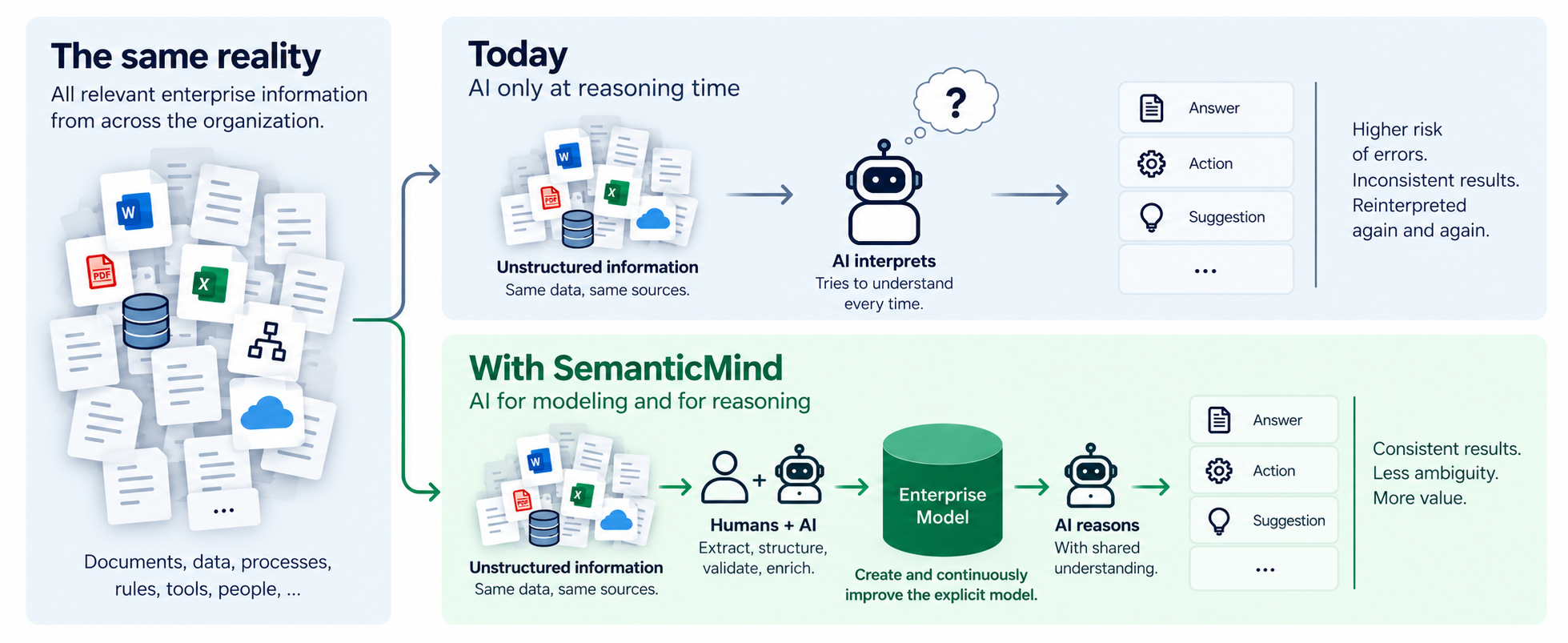
In an AI-centric setup, the model receives the information mess directly and has to reinterpret it during reasoning. With SemanticMind, humans and AI first turn the same information into an explicit enterprise model. That shared model then becomes the foundation for more consistent reasoning and action.
AI-centric architecture
AI mainly interprets scattered documents, data and rules at reasoning time. The same ambiguity returns again and again.
SemanticMind
AI is used earlier in the process as well: to help structure, validate and enrich the enterprise model, which then serves as the shared basis for humans, software and AI.
People provide meaning and direction
People contribute business understanding, experience, goals, prioritisation, judgement and responsibility. These must not be replaced by statistical plausibility alone.
People decide which goals apply, which rules are acceptable and which consequences can be owned.
AI expands the semantic thinking space
AI can process large volumes of knowledge, recognise patterns and relationships, explore consequences, generate alternatives and prepare technical artefacts.
Its strength is considering many connected aspects at once and deriving traceable proposals from them.
Clear roles
Human
Defines meaning, goals, priorities and responsibility.
Semantic Reality
Provides the shared business context.
AI
Analyses, interprets and generates possible results.
Technical platform
Executes reviewed and approved artefacts.
Traceability remains essential
A recommendation must be traceable to situations, rules, information and alternatives. A technical artefact must show from which capability, event or requirement it was derived.
Final decision and approval stay with the human.